Executive Briefing
The Architecture of the Impossible (Part Four): The Vacuum Cure, the Lunar Mines, and the Final Frontier
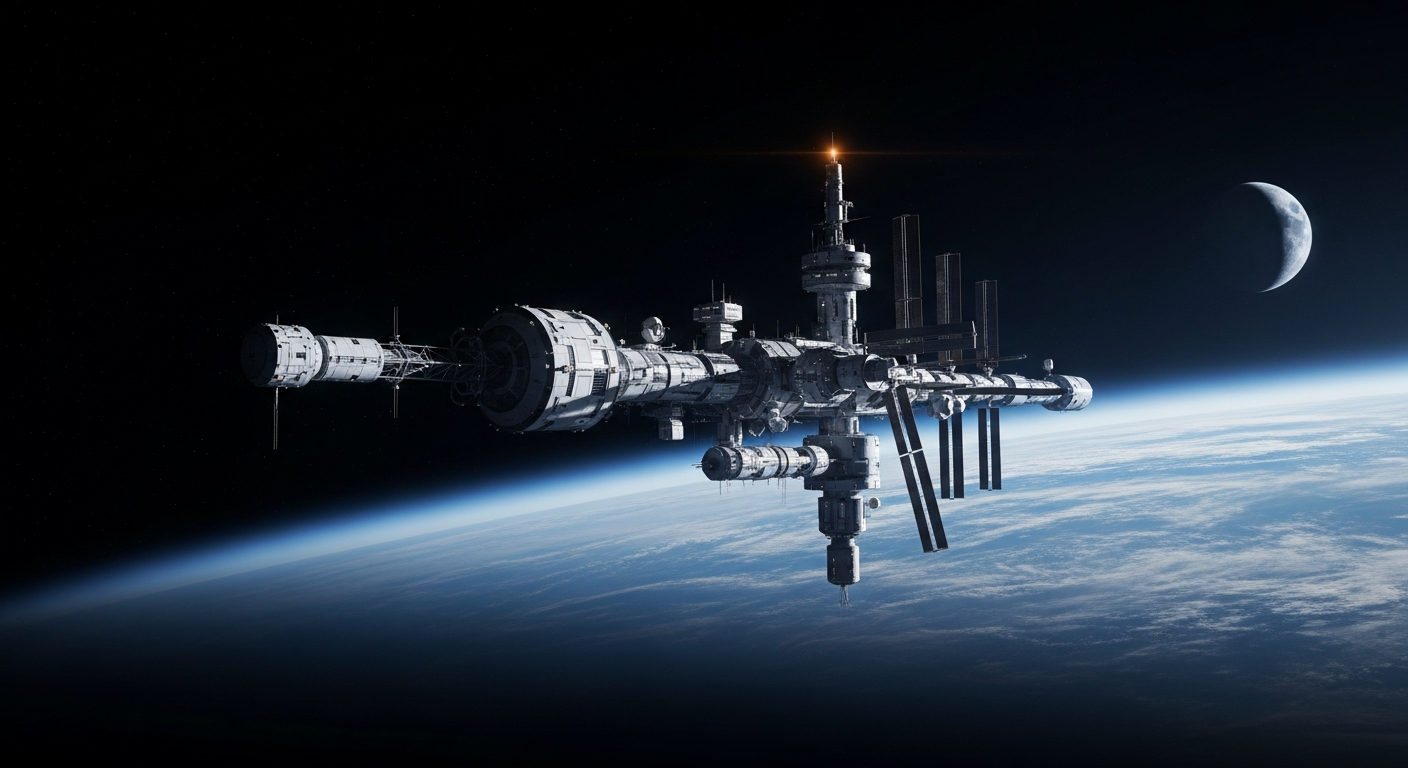
In the first three parts of this series, we mapped out the physical infrastructure of tomorrow. We traced the path from the dirt roads of the 1800s to the automated Drone Highways, and finally up to LEOtopia - the sprawling, commercial "Floating Fortress" in Low Earth Orbit.
We have established how we will get there, how we will build it, and who will live there. But the most important question remains: Why? What can we actually do in the vacuum of space that we cannot do on Earth?
The answer isn't just about faster travel or better views. It is about eradicating disease, mining untouched worlds, and fundamentally changing our place in the universe.
The Vacuum Cure: Eradicating Cancer in Zero-G

On Earth, gravity dictates biology. When scientists try to study cancer cells or grow protein crystals to develop targeted medications, gravity forces those cells to flatten out in a petri dish, or causes the crystals to form with imperfections.
In the microgravity of LEOtopia, that restriction disappears.
Without gravity pulling them down, cancer cells grow in perfect, three-dimensional spheres, exactly as they do inside the human body. This allows researchers to test oncology drugs with unprecedented accuracy. Even more groundbreaking is protein crystallization. In a vacuum, proteins form massive, perfectly structured crystals. This allows pharmaceutical engineers to map the exact molecular structure of diseases and design "key-in-lock" medications that bind to cancer cells and destroy them without harming healthy tissue.
We are already doing this. Merck's cancer immunotherapy drug, Keytruda, was refined using microgravity research on the International Space Station. Once LEOtopia is fully operational, we won't just be doing research up there - we will have orbital pharmaceutical foundries manufacturing the cures to Earth's most devastating diseases.
The Next Gold Rush: Mining the Moon
Earth is a closed system, and we are rapidly burning through its rare-earth metals. To sustain our technological leap, we have to look to our closest neighbor.
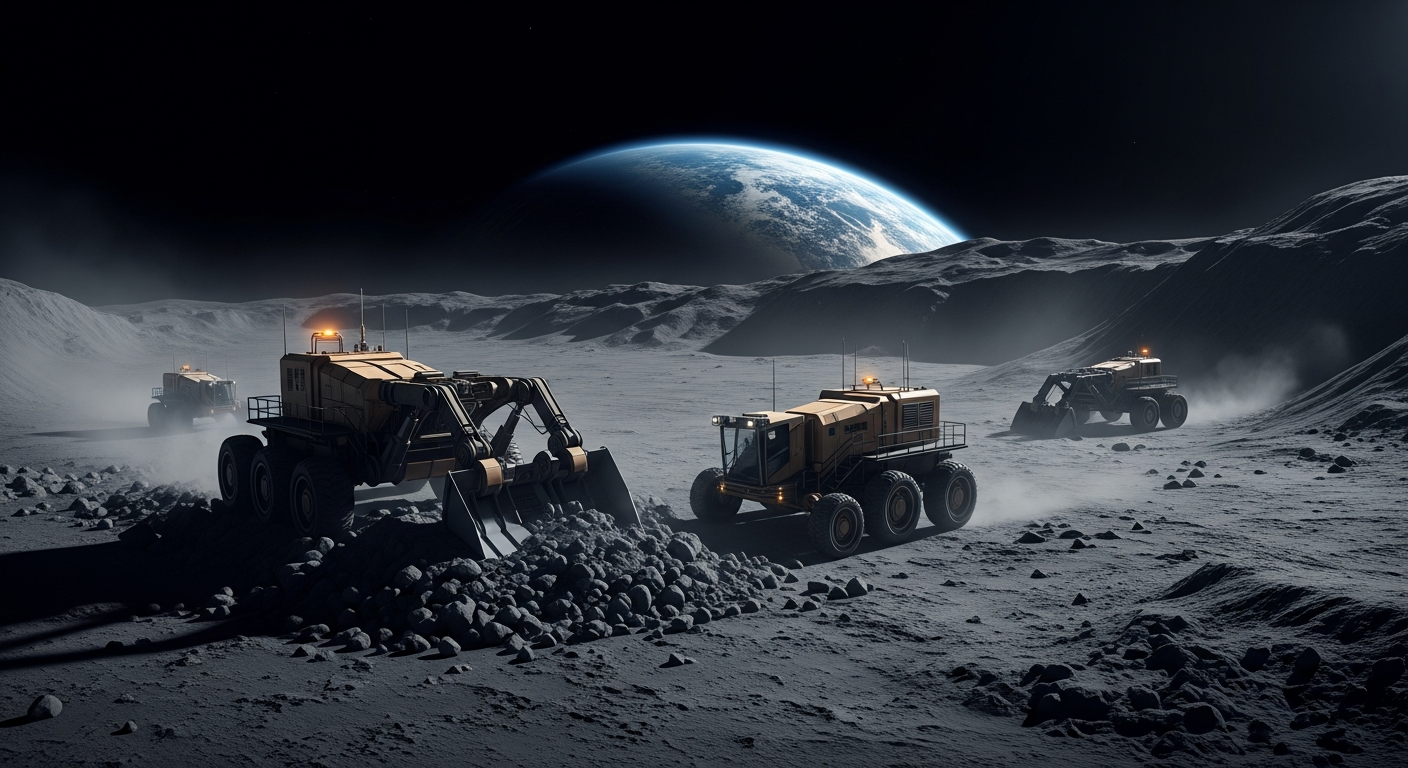
From the launchpads of LEOtopia, the Moon is no longer a distant, romantic rock; it is a quarry.
What is actually inside it? The lunar regolith (the surface dirt) is packed with Helium-3, an incredibly rare isotope on Earth that is considered the holy grail of clean, limitless nuclear fusion energy. Furthermore, the Moon's poles hold billions of tons of water ice - which, as we discussed in Part 3, can be broken down into hydrogen and oxygen to create rocket fuel.
We will deploy autonomous AI mining rovers to extract these materials. The Moon will become the ultimate off-world supply chain, feeding raw materials back down to the foundries of LEOtopia without ever having to drag them up through Earth's gravity well.
The Orbital Shield
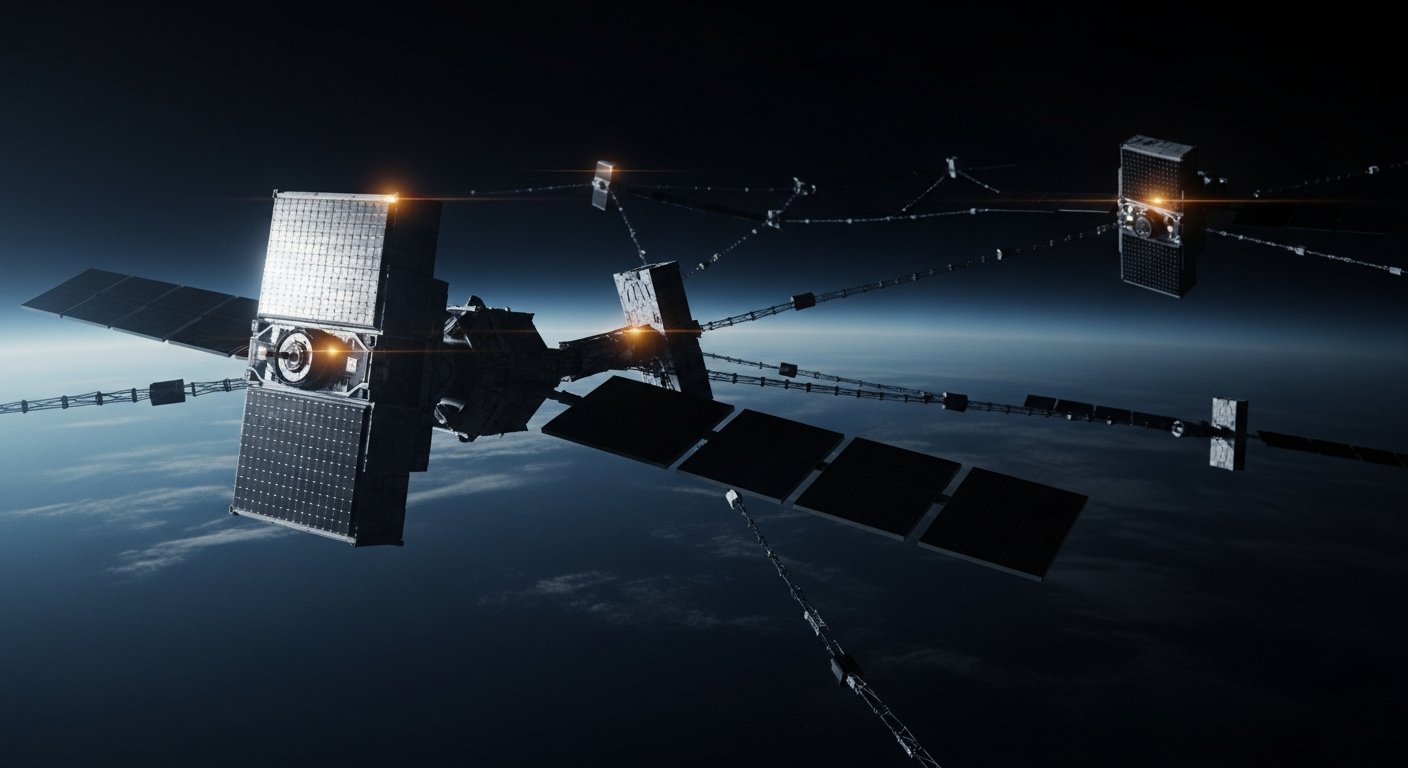
With trillions of dollars of infrastructure, biotech labs, and human citizens living in orbit, LEOtopia will require protection.
The concept of an orbital defense system has been debated since the Cold War, but the reality is rapidly approaching. The United States Space Force isn't just tracking debris; they are laying the groundwork for a massive, integrated defense platform. This won't be a Death Star firing lasers at the ground. It will be a highly classified, AI-managed web of early-warning sensors, kinetic interceptors, and directed-energy grids designed to neutralize ballistic threats, rogue satellites, and cyber-intrusions before they ever reach our atmosphere.
Orbit will be the ultimate high ground, effectively rendering traditional terrestrial warfare obsolete.
The Final Frontier: Seeing What Was Always Hidden
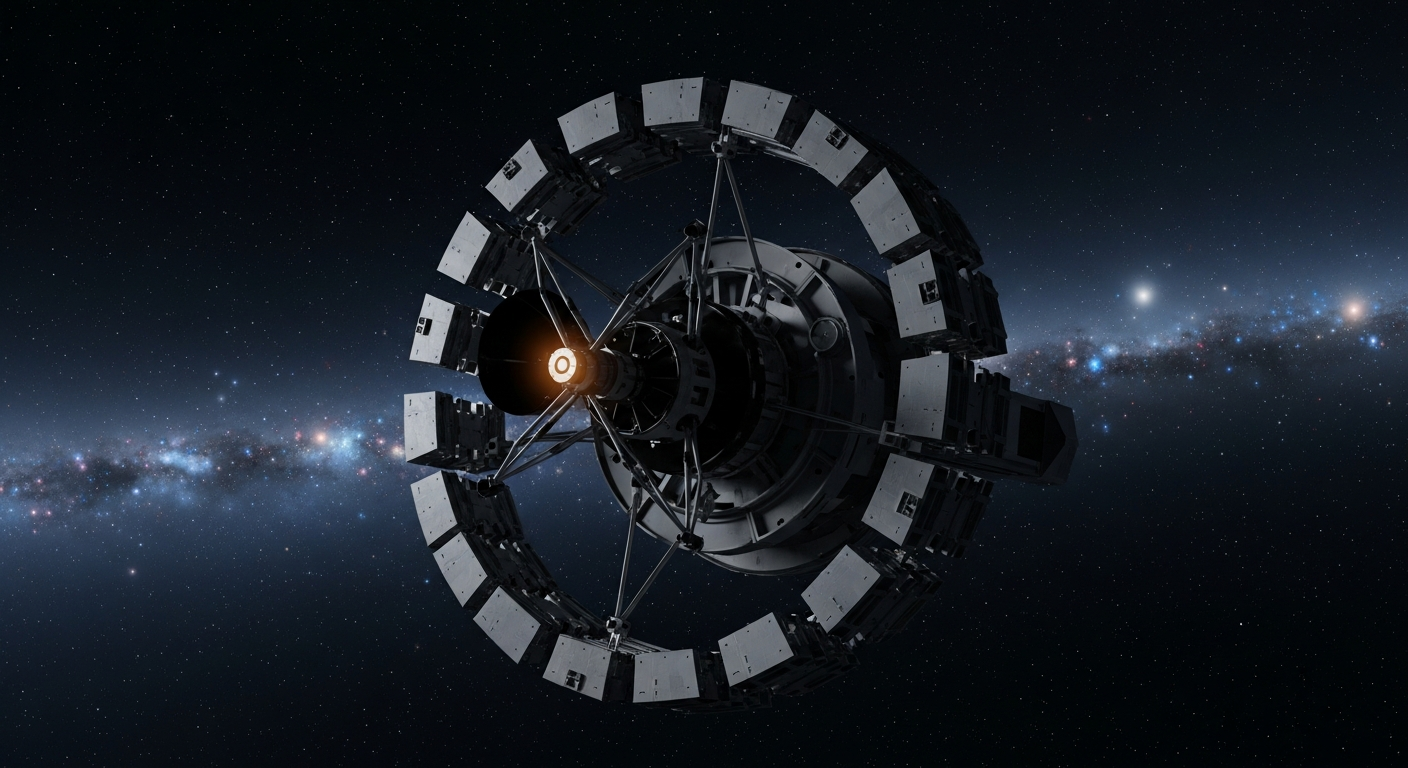
"Space, the final frontier." It is a massive cliché, but it is deeply true.
If you stand on Earth and look through a telescope, you are looking through a dirty window. Our atmosphere distorts light, absorbs infrared signals, and blinds us to the deepest secrets of the universe.
But what happens when we assemble next-generation telescope arrays in the pure vacuum of LEOtopia, or on the dark side of the Moon, completely shielded from Earth's radio noise?
We will see to the very edge of time. We will analyze the atmospheres of exoplanets thousands of lightyears away, specifically scanning for the biosignatures of life - methane, oxygen, and artificial pollutants.
AI is currently in a state of relentless learning. When we feed the raw, unobstructed data from these deep-space arrays into next-generation quantum AI, it won't take decades to find anomalies. It will find them instantly.
Are we alone? For human history, we have been guessing. From the Floating Fortress, we will finally have the tools to know for sure.
We conquered the dirt. We are mastering the sky. We are building the Fortress. And very soon, we are going to find out exactly who- or what - is sharing this universe with us.
From the drone corridor to the lunar mines, every layer of this new economy depends on knowing where everything is and where it is going. DroneTracking.com is the exact-match, authoritative portal for the autonomous airspace era, and it is available for private acquisition.
Inquire About Acquisition