Executive Briefing
The Architecture of the Impossible (Part Two): The Logistics of Orbit and the First Citizens of Space
In Part One, we talked about the skeptics. The people who looked at the wheel, the train, the car, and the internet and said it was not based in reality and would never happen.
We proved them wrong every single time. Now the exact same cycle of skepticism is playing out over the sky above us. But the infrastructure of tomorrow does not care about skeptics. It is being built right now, in stages, leading us step by step into the permanent occupation of space.
Step One: The Drone Highway
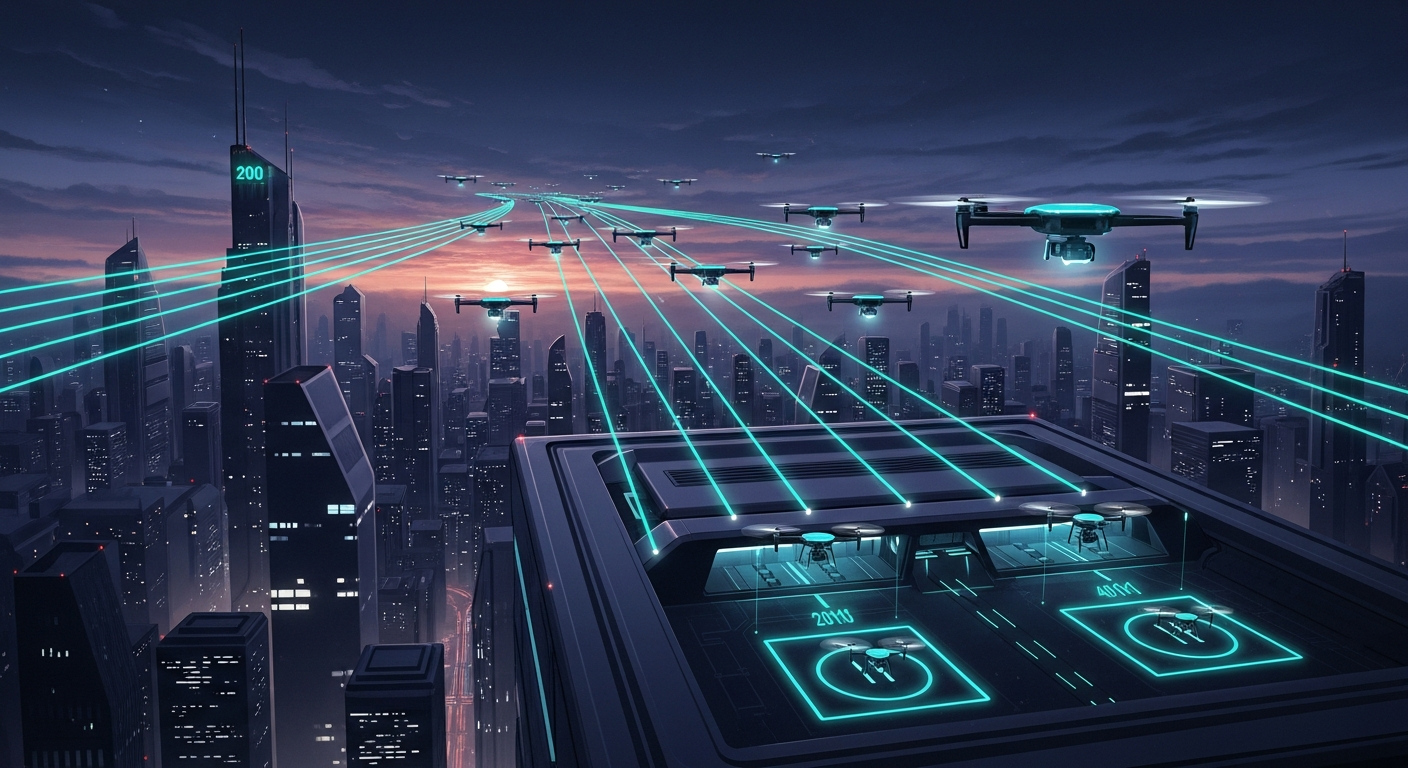
Before we conquer the stars, we have to master the sky. That is happening right now between 200 and 400 feet. The Unmanned Traffic Management networks being established today are the crucial first staircase.
We are teaching AI to manage thousands of autonomous drones navigating a three-dimensional freeway, avoiding obstacles, and handling their own battery swaps at automated maintenance hubs. This is not just about delivering packages faster. It is the fundamental tracking and routing logic required for the next phase. If we cannot safely automate the sky at 400 feet, we cannot automate it at 400 miles.
Step Two: The LEO Logistics Corridor
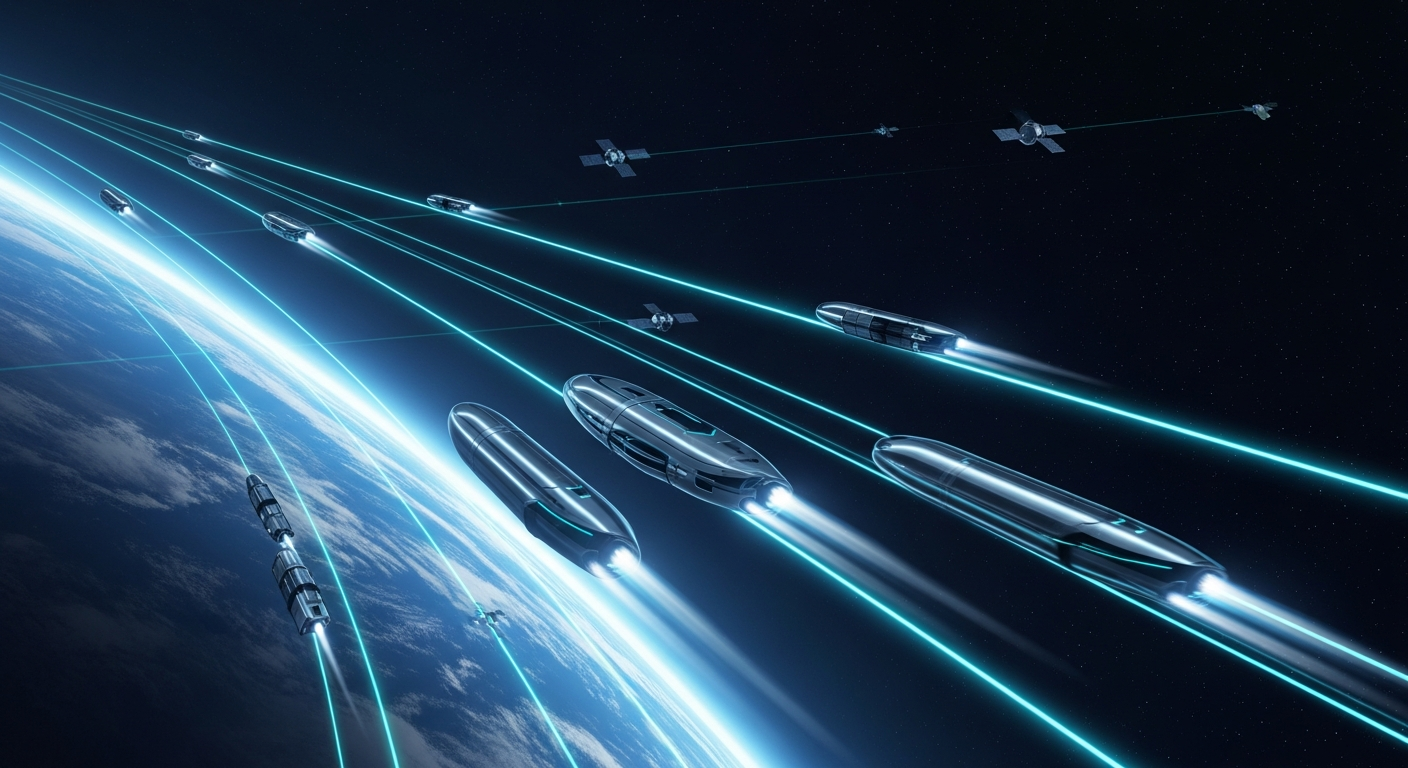
Once the lower sky is mapped and automated, the real leap happens. Low Earth Orbit will cease to be an empty void and become a massive, high-speed logistics corridor.
Imagine you need to move a critical shipment, or yourself, from New York to Australia. You will not drive to an airport. You will head to a designated spaceport, the orbital equivalent of an airport runway, which are already being developed globally. SpaceX's Starbase in Texas is just the beginning.
You board a human transport pod. Let us call it the Leopard.
The Leopard and the End of Friction
The immediate pushback against suborbital transport is always human fragility. A rocket pulls too many G-forces. The average person cannot handle it.
But we are not launching the average person strapped to a metal chair. Inside the Leopard, passengers will be secured in advanced mechanical cocoons. These pods will use active fluid-immersion technology and modulated acceleration curves to absorb and minimize the G-forces by up to fifty percent or more.
Once the Leopard clears the atmosphere, it enters Low Earth Orbit. Here there is no air resistance and no friction. The craft is propelled at 10,000 to 15,000 miles per hour, guided by human pilots but continuously backed up by the same AI architecture refined on the drone highways below. Less than an hour later, the Leopard executes a propulsive reentry and drops safely onto a landing pad in Sydney.
What about cost? This is where the skeptics always point. But remember the computer. The first mainframes cost millions and filled an entire room. Today you carry a supercomputer in your pocket for a few hundred dollars. Reusability, launching a rocket, landing it, and flying it again like a commercial jet, will drive the cost of a suborbital ticket down until it is accessible to the average traveler.
Step Three: The First Citizens of Space
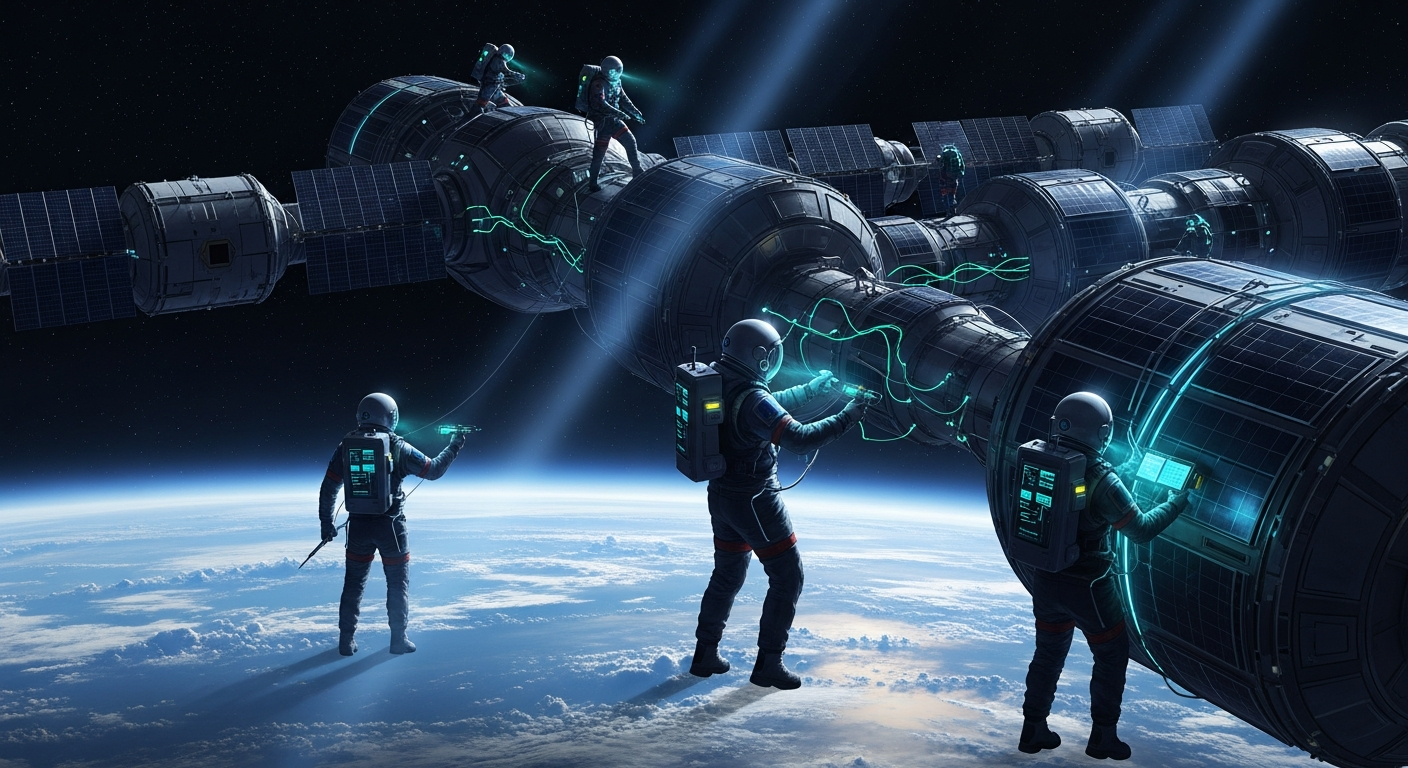
If Low Earth Orbit is a logistics corridor, who maintains it? Who repairs the solar panels on a multi-billion-dollar satellite? Who clears the dangerous debris drifting through that orbit?
Eventually, it will not just be automated drones. It will be humans. And the most profound shift in human history will be the day a human is born up there and never comes down.
This is not a theoretical science-fiction premise. In 2025, a Dutch biotech startup called SpaceBorn United successfully launched its first mini-laboratory into orbit aboard a SpaceX rocket. They are actively developing space embryo incubators designed to facilitate in vitro fertilization and early embryonic development in zero gravity. By 2028, their stated goal is to facilitate human conception and early development in partial gravity.
We are on the precipice of a new breed of humans. A generation born in space, adapted to a microgravity environment, whose bodies are accustomed to the very conditions that Earth-born astronauts struggle against. They will be the permanent wardens of the orbital infrastructure.
The Upward Trajectory
We have always fought gravity. We evolved from hunched creatures into beings that stand perfectly straight, constantly resisting the pull of the earth. Going to space, where gravity no longer dictates our movements, is simply the ultimate expression of that evolution.
And resources? We will not need to haul water up from Earth at enormous expense. We will harvest it from the ice already present in space, refining it to provide a constant supply for these orbital habitats.
This is the architecture of the impossible. The drone highways lead to the spaceports, which launch the Leopards into the logistics corridors, maintained by the first true citizens of space.
It is here. The infrastructure is being built today.
The only question left is this. Once we have conquered Low Earth Orbit and built our telescopes out past the atmosphere, where our vision is finally unobstructed, where do we go next?
Every stage of this build-out, from the drone highway at 400 feet to the orbital corridor at 400 miles, runs on tracking and routing. DroneTracking.com is the exact-match, authoritative portal for the autonomous airspace era, and it is available for private acquisition.
Inquire About Acquisition