Executive Briefing
Sky Highways & Ground Truths: Who Fixes the Drone Revolution When It Falls From the Sky?
We have all heard the futuristic promise: look up, and the sky will be alive. Between 200 and 400 feet above our heads, a silent, invisible grid, the Unmanned Traffic Management (UTM) corridor, will soon morph into a bustling highway. Drones will zip past, delivering everything from life-saving medications and hot lattes to, perhaps eventually, your family pet.
The sky is, quite literally, the limit.
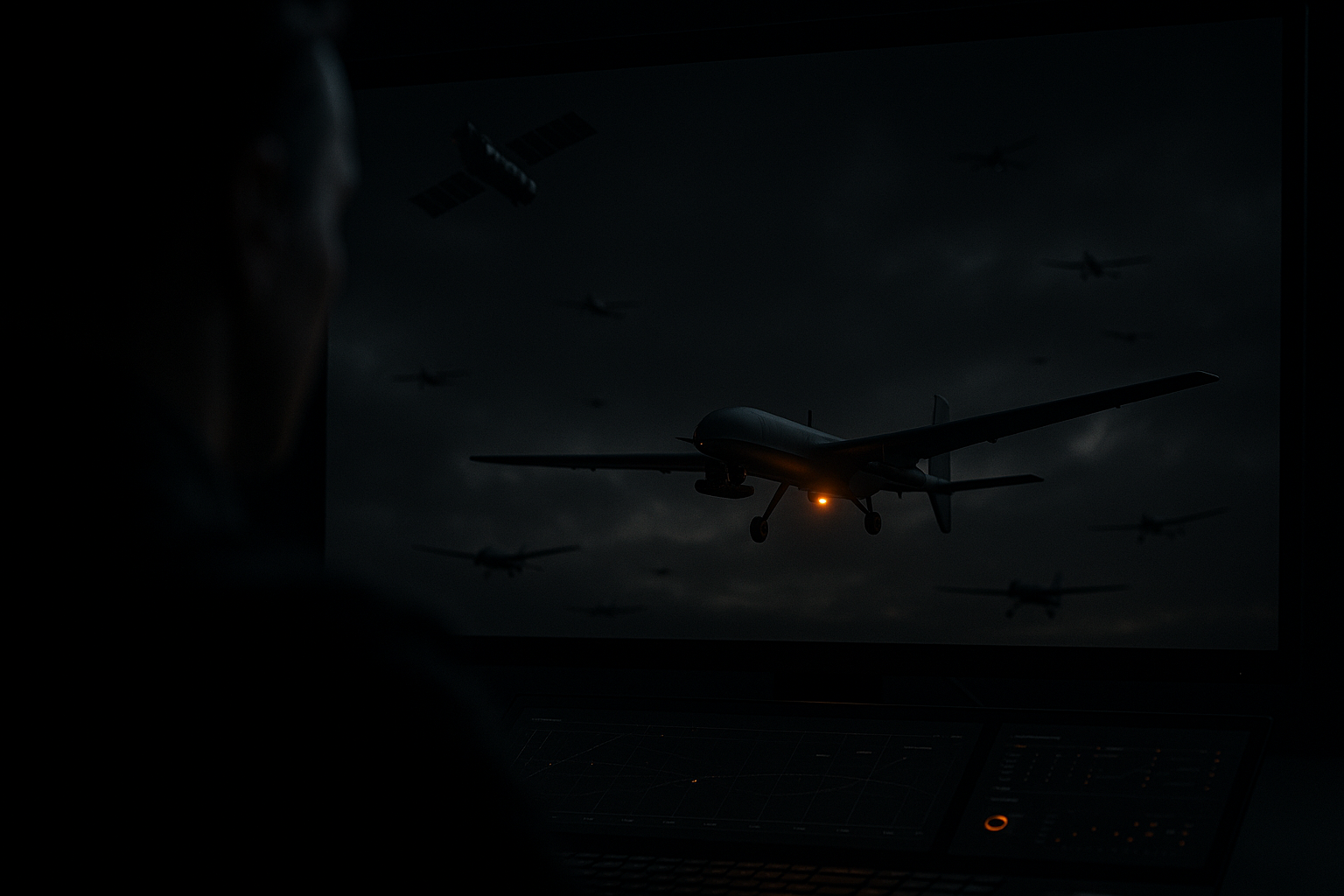
But as we build this unprecedented infrastructure in the air, we are forcing a massive, earthbound question to the surface: what happens when the tech fails? Drones are machines. They have rotors, batteries, software, and sensors. They will wear out, they will malfunction, and yes, occasionally, they will fall out of the sky.
When a drone makes an emergency landing in a suburban park or a crowded intersection, who answers the call?
Welcome to the dawn of the Vertiport Technician and the Mobile Drone Mechanic, the unsung heroes who will keep our skies spinning.
The Concept of the Unmanned Traffic Management (UTM) Grid
To understand the repair ecosystem, we first have to understand the highway itself. Unlike commercial airplanes, drones will not be guided by human air traffic controllers staring at radar screens. Instead, the UTM is a highly automated, digital ecosystem.
Predictive Routing: algorithms manage thousands of flight paths simultaneously to avoid collisions.
Geofencing: virtual barriers keep drones away from airports, power plants, and schools.
Yet, even the most sophisticated digital grid cannot prevent a sudden hardware failure or a bird strike. When a drone's motor seizes mid-flight, the UTM does not just need a software patch, it needs boots on the ground.
Enter the Quick-Act Vertiport Techs
The backbone of drone logistics will be vertiports, localized hubs where drones land, recharge, swap batteries, and load cargo.
The Vertiport Technician is the modern equivalent of a Formula 1 pit crew member mixed with an aviation mechanic.
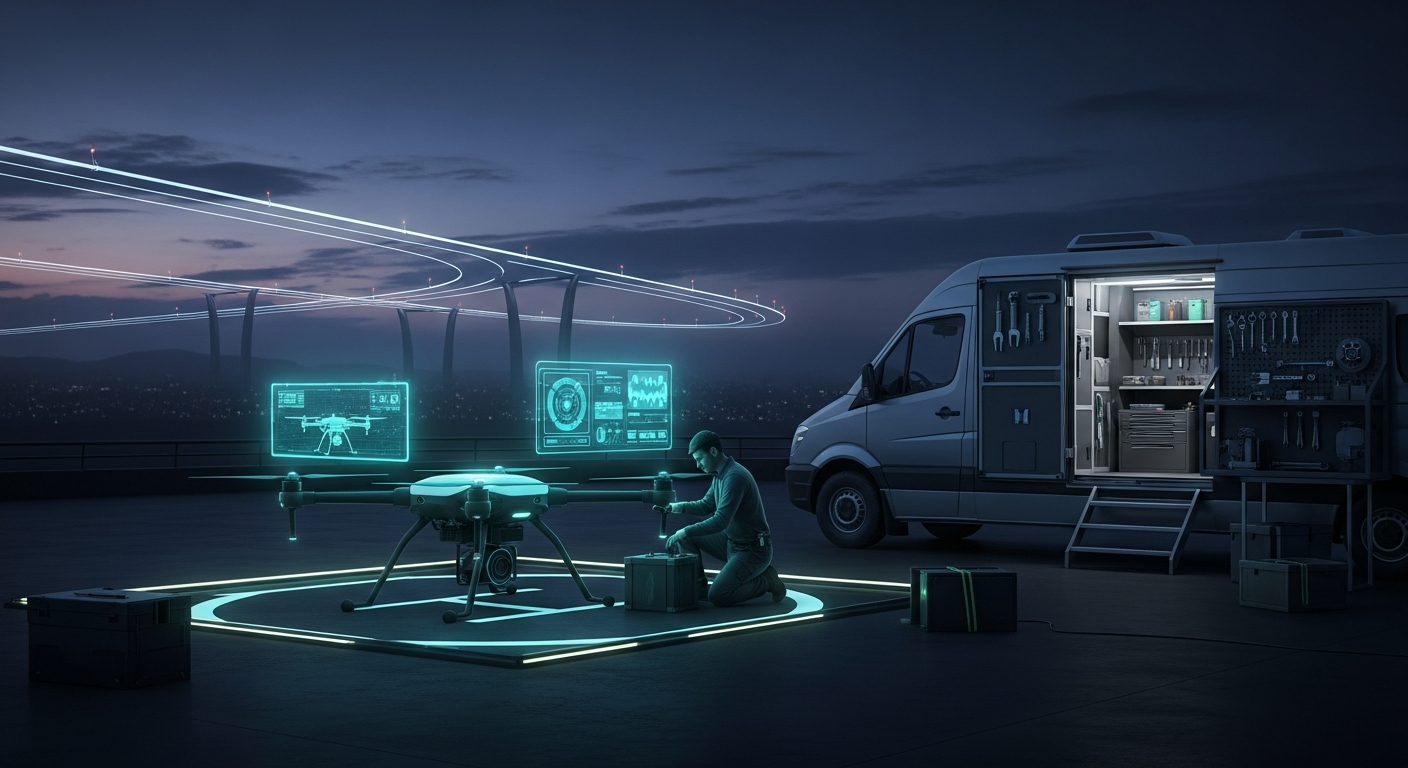
Operating in high-speed environments, these technicians will be responsible for rapid-fire diagnostic checks. Using automated telemetry data beamed from the drone before it even lands, a Vertiport Tech will know exactly what is wrong. Within minutes, they will swap out faulty rotors, replace degrading lithium-ion batteries, and recalibrate sensors to get the aircraft back into the UTM stream.
The First Responders of the Sky: Mobile Drone Mechanics
But what happens when a drone cannot make it back to the vertiport? What if it undergoes an automated safe-land sequence and touches down on a sidewalk, a golf course, or a highway shoulder?
This is where the Mobile Drone Mechanic comes in.
Imagine a fleet of specialized sprinter vans, outfitted like high-tech mobile workshops. When a drone forces an emergency landing, the UTM system will instantly drop a GPS pin and dispatch the nearest mobile mechanic.
These technicians will face unique challenges. Securing the scene means ensuring public safety around a downed aircraft, especially if it carries hazardous materials or sensitive cargo. On-the-spot triage means deciding whether the drone can be repaired on-site or if it needs to be safely decommissioned and loaded into the van. And data recovery means extracting flight logs to figure out exactly why the failure occurred to prevent fleet-wide issues.
The What If Scenario: When a Drone Falls
It is the elephant in the room. What happens if a drone completely fails and drops?
The industry is already engineering solutions for this nightmare scenario. Future commercial drones operating in urban areas will be equipped with ballistic parachutes that deploy automatically if a critical power loss is detected, slowing the descent to harmless speeds. Furthermore, redundant flight controllers and multi-rotor configurations mean that if one or two motors die, the drone can still limp to a safe landing zone.
When a crash does happen, a rigorous chain of custody will mirror traditional aviation investigations. Mobile mechanics will work alongside UTM data analysts to isolate the variable, be it cyber interference, structural fatigue, or extreme weather.
The New Blue-Collar Frontier
The drone revolution is not just an achievement for software engineers and aerospace designers. It is the birth of a massive, vital blue-collar workforce.
As we look up and marvel at the seamless flow of unmanned traffic 300 feet above us, we must remember the ecosystem keeping it there. The future of flight relies entirely on the technicians standing on the tarmac, wrench in hand, ready to catch the sky when it falls.
Every emergency landing, dispatch, and repair starts with one thing: knowing exactly where each drone is. Tracking is the connective tissue between the sky highway and the ground crews who keep it running. DroneTracking.com is the exact-match, authoritative portal for that entire ecosystem, and it is available for private acquisition.
Inquire About Acquisition