Executive Briefing
The Architecture of the Impossible (Part Three): The Floating Fortress, the Trash Collectors, and the Speed of the Vacuum
Humanity's evolution has always been vertical. When we first stood upright, we defied gravity. When we built the wheel, paved the roads, and erected skyscrapers, we were simply laying the groundwork for the ultimate upward trajectory.
Today, we are mastering the skies. The drone highways are establishing an automated, perfectly tracked corridor beneath 400 feet. Massive cargo jets crisscross the stratosphere, moving millions of pounds of steel and commerce. But these are just intermediaries, ferries operating in the shallow waters of Earth's atmosphere.
The real architecture is being built higher up. And it starts with the Fortress.
The Floating Fortress (LEOtopia)
Once we have completely automated the drone corridors and stabilized our suborbital transport pods, the Leopards we discussed in Part Two, the next immediate step is building the hub.
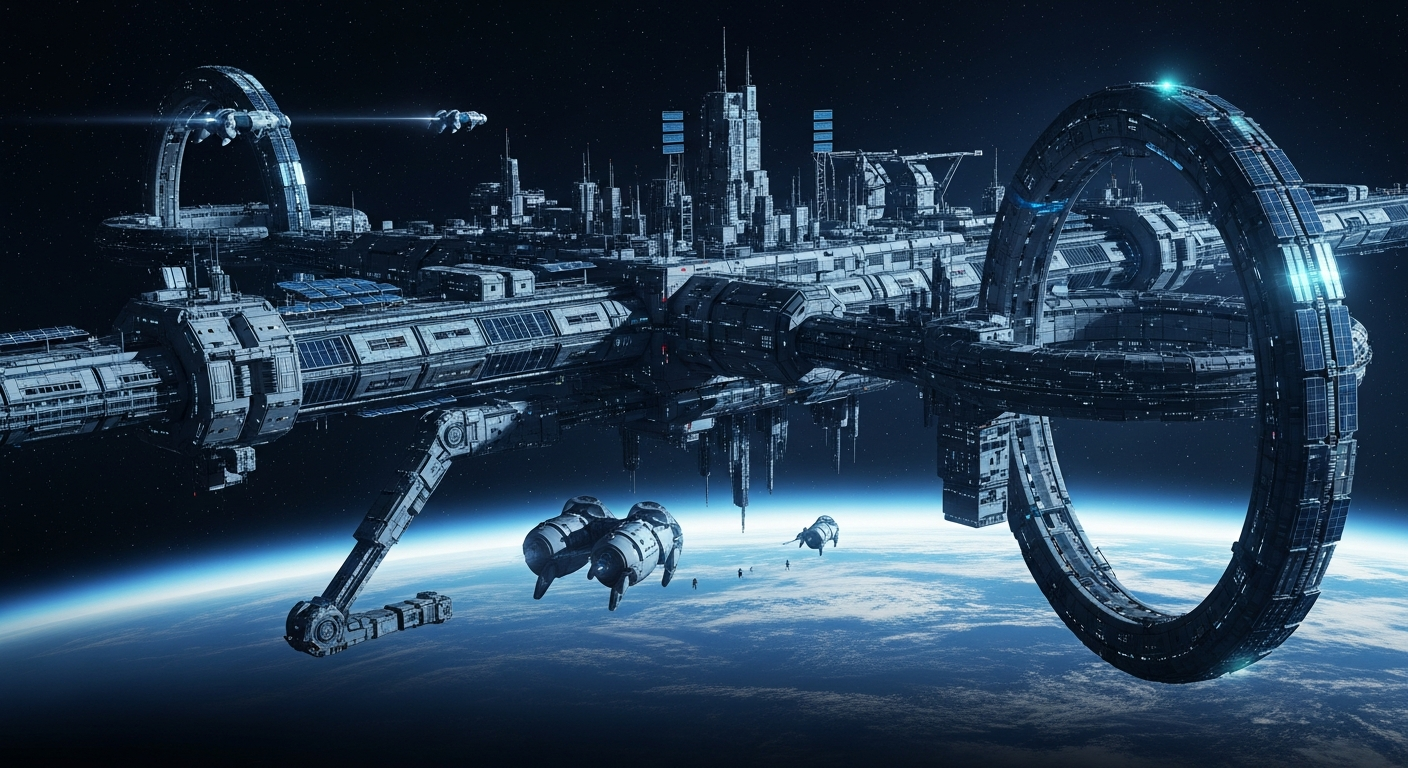
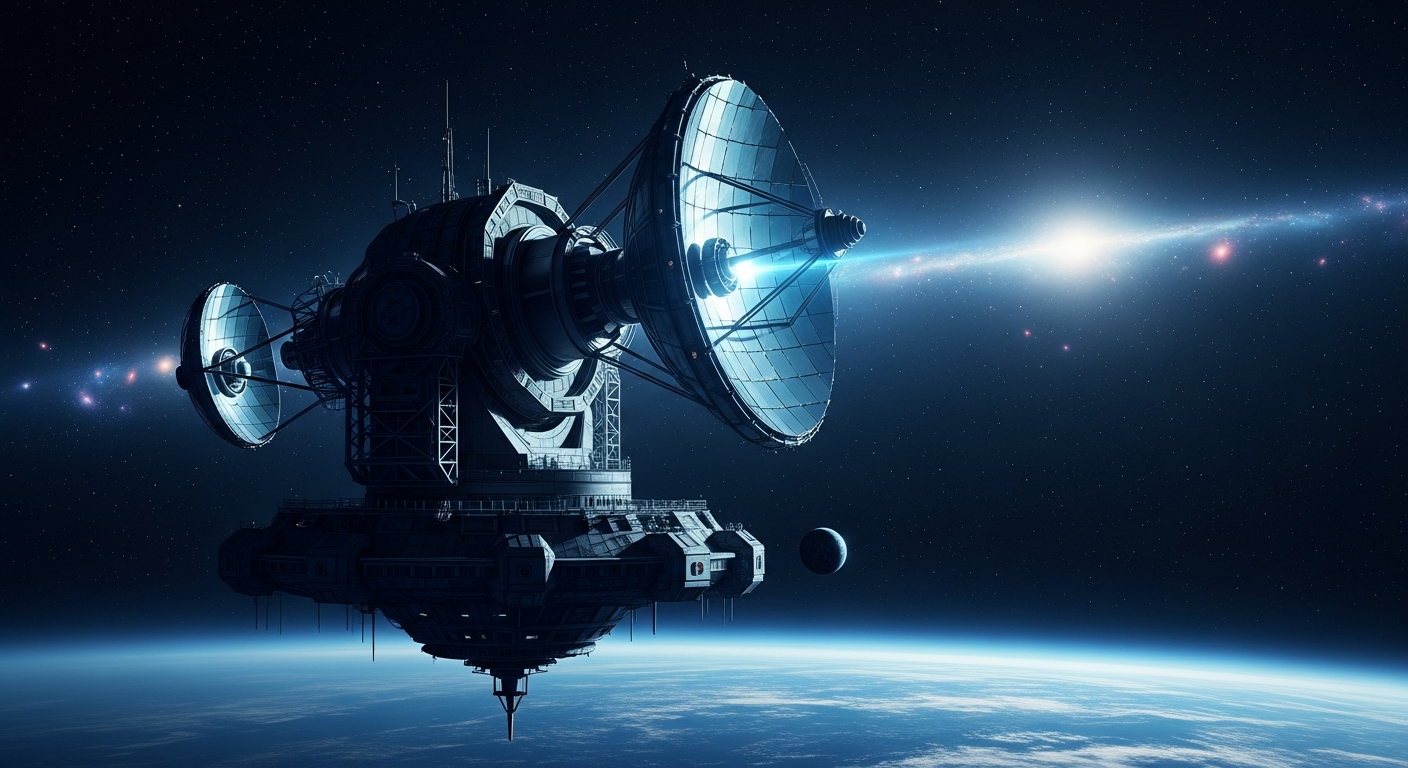
Right now, NASA is preparing to retire the International Space Station by 2030, and it is being replaced with commercial space stations, privately owned orbital business parks from companies like Axiom, Starlab, and Vast. But these will not stay research labs for long. They will evolve into sprawling, floating fortresses in Low Earth Orbit. Let us call this orbital metropolis LEOtopia.
LEOtopia will not just house astronauts. It is an industrial city. It requires an entirely new workforce: orbital machinists, zero-gravity engineers, programmers, designers, and project managers living and working permanently above the atmosphere.
Why build a city up there? Because of the physics of deep space travel.
If we want to go to the Moon, to Mars, or into the deep solar system, launching from Earth is mathematically exhausting. You burn ninety percent of your fuel just fighting the atmosphere and Earth's deep gravity well. But if you assemble the spacecraft in LEOtopia and launch from there, the equation changes entirely.
The Speed of the Vacuum
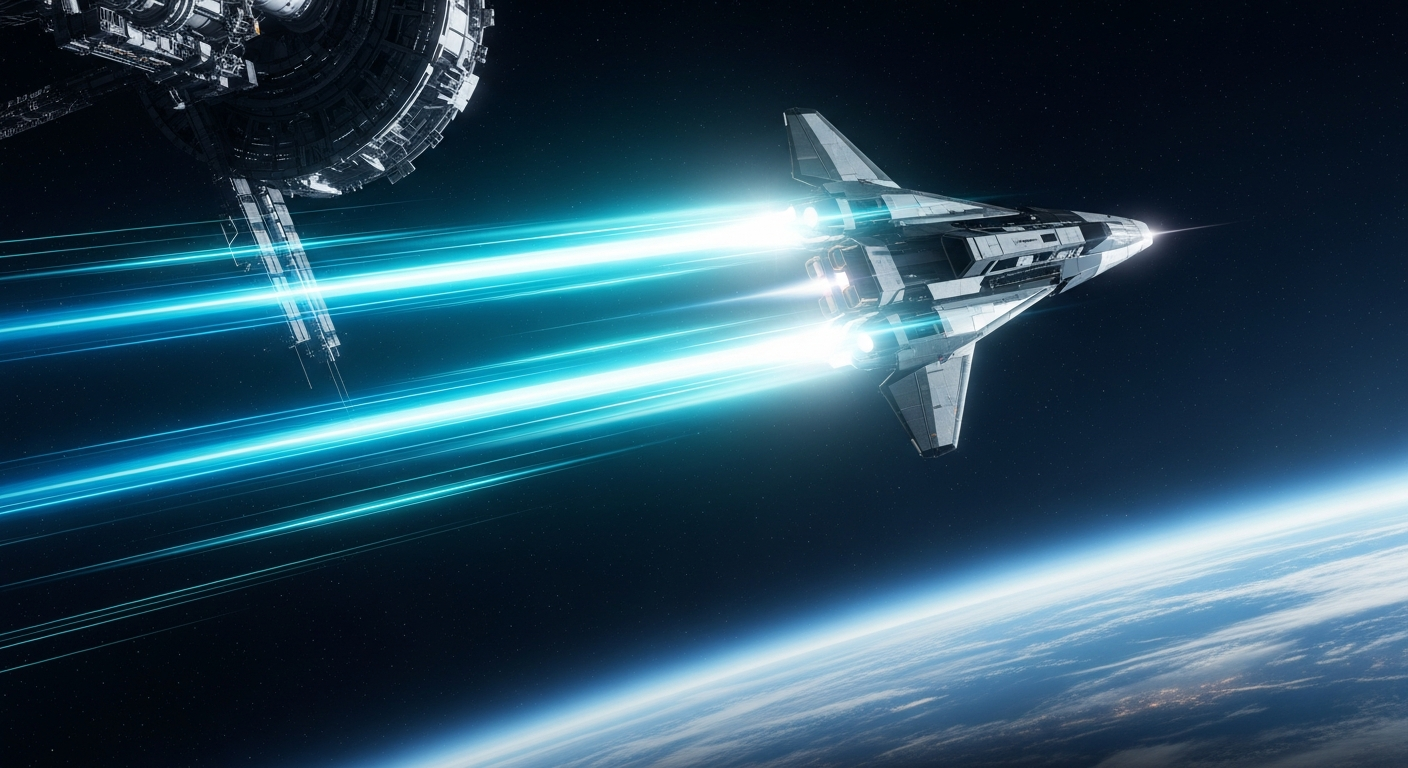
From LEOtopia, there is no air friction. The amount of energy required to move is a fraction of what it takes on Earth.
With the same propulsion systems, spacecraft launching from orbit can hit speeds that are completely unheard of on Earth. For context, a high-velocity sniper bullet travels at roughly 2,000 miles per hour. Spacecraft launching from the vacuum of Low Earth Orbit, unhindered by drag, will easily sustain speeds exceeding 20,000 to 50,000 miles per hour. And with AI constantly iterating on advanced propulsion models, we are slowly calculating how to push toward fractions of the speed of light.
The Wardens and the New Breed
As we covered in Part Two, the biotech industry is actively developing in-vitro space incubation.
Once LEOtopia is established, families will be made in space. We will see the rise of a completely new breed of human being, people who have never touched Earth's soil, whose bone density, cardiovascular systems, and spatial awareness are entirely adapted to microgravity.
To the novice, this sounds mind-boggling. But it is the natural progression of life. These space-born citizens will be the wardens of our orbital infrastructure. And their most critical job will be managing the trash.
Monetizing the Void: The Trash Collectors
If you are riding a Leopard transport pod into LEOtopia, the greatest threat to your life is not mechanical failure. It is a stray bolt from a defunct 1990s satellite.
In orbit, an object the size of a paint fleck travels at 17,500 miles per hour. At that speed, a stray bolt has the kinetic energy of a hand grenade. It will punch straight through a spacecraft. Low Earth Orbit is currently a swirling pool of acid, thousands of pieces of dangerous, high-velocity shrapnel.
This is where the monetization of space takes a massive leap forward. Today, companies like ClearSpace and Astroscale are already building the prototypes. But tomorrow, it will be an automated, AI-driven industry.
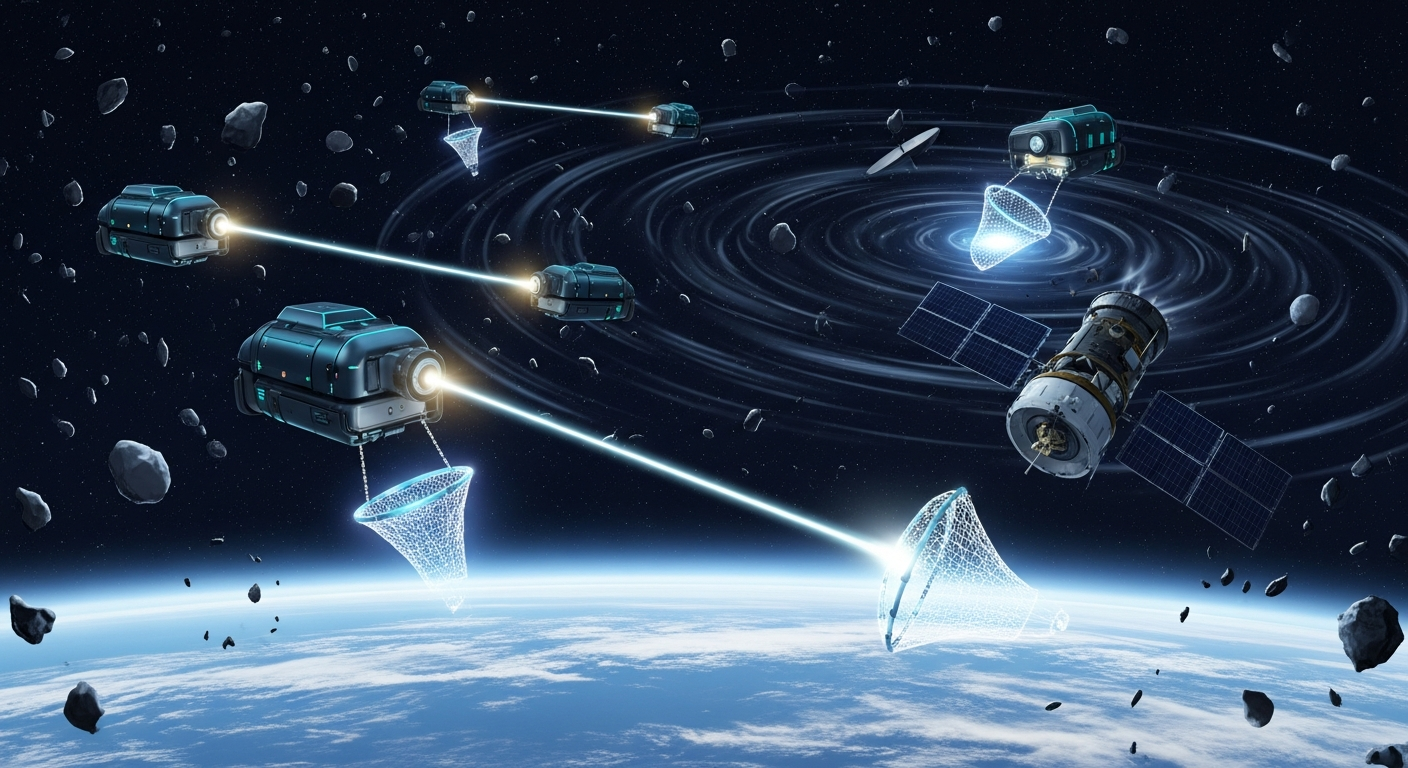
Picture swarms of AI-assisted garbage pods sweeping through Low Earth Orbit. They will use directed-energy laser ablation to vaporize small debris, and deploy massive magnetic blankets, nets, and harpoons to capture dead satellites.
But they are not just cleaning up. They are mining.
In a circular space economy, it is far too expensive to launch raw steel and aluminum from Earth. The trash collectors will drag this high-grade aerospace debris back to the foundries of LEOtopia. That junk will be melted down, refined, and fed directly into the 3D printers and manufacturing bays of the Floating Fortress. We are going to build the ships of tomorrow using the garbage of yesterday.
What Comes Next?
Once LEOtopia is secure, once the trash is cleared, and once our space-born workforce is manning the stations, our vision shifts outward.
If we look through a telescope from Earth, we are looking through a thick, wavy blanket of atmosphere. But if we build massive telescoping arrays on our Floating Fortress in the pure vacuum of space, we can see directly to the edge of the universe.
We have mastered the dirt. We are mastering the sky. We are moving into orbit. The only question left is this. Once we can clearly see what is out there, how fast can we build the ships to reach it?
From the drone corridor to LEOtopia, every layer of this new economy depends on knowing where everything is and where it is going. DroneTracking.com is the exact-match, authoritative portal for the autonomous airspace era, and it is available for private acquisition.
Inquire About Acquisition